
Schedule a Consultation
Our job isn’t over until the patient is smiling
Contact Us
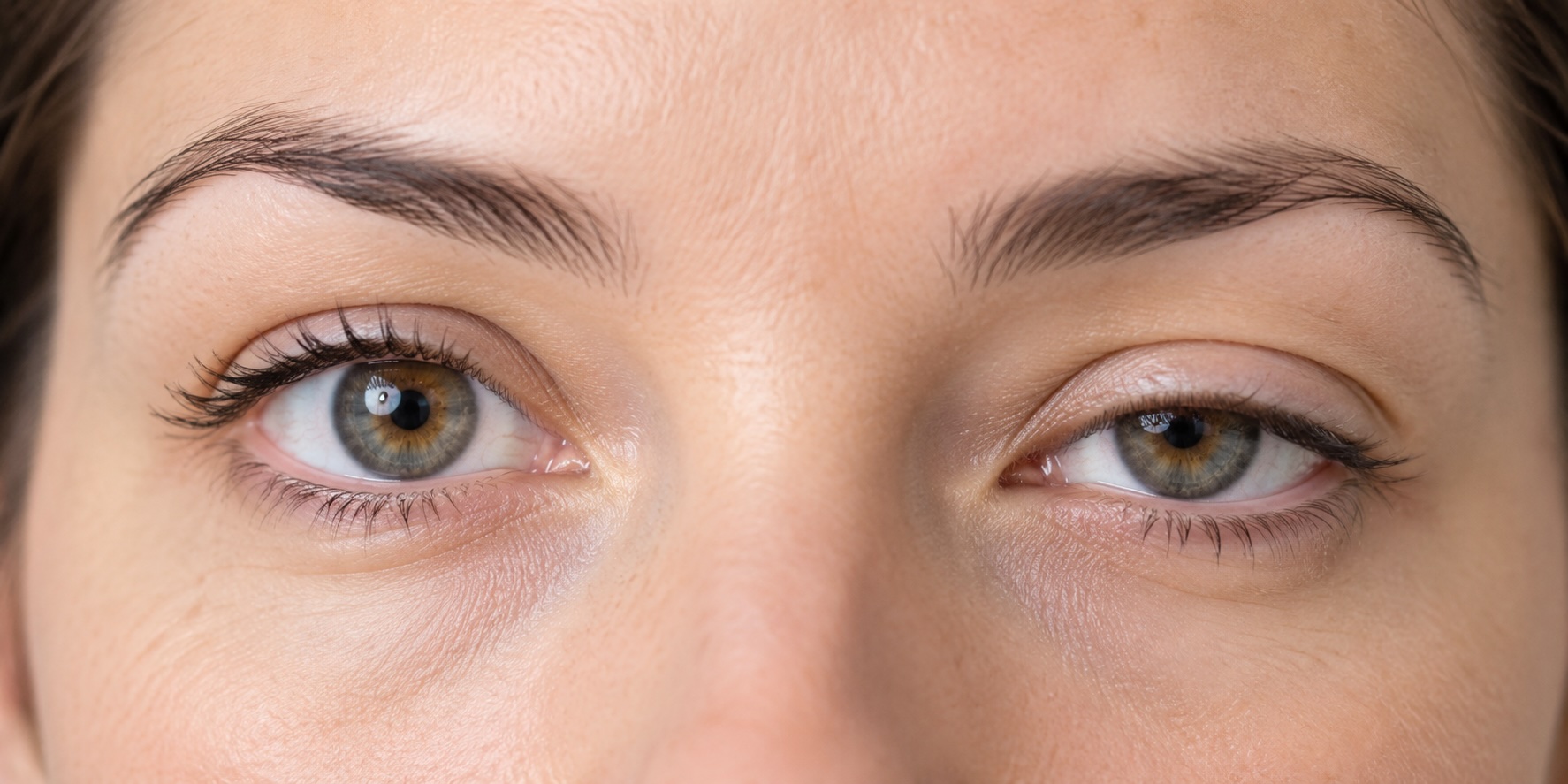
An eye that can't blink loses its natural protection, quickly becoming dry, irritated, and vulnerable to corneal damage that can threaten vision if it goes untreated. This is a real risk for anyone with facial paralysis, since the same nerve that controls a smile also controls the eyelid's closing muscle. Dr. Tessa Hadlock, a Harvard-trained facial nerve specialist who has spent over 30 years treating facial paralysis in Boston, sees this complication often and helps patients protect their vision while restoring facial function.
In this blog, she explains what happens to an eye that can't fully close, the warning signs to watch for, and the treatment options available.
Blinking spreads a thin layer of tears across the eye every few seconds, keeping the surface moist and washing away debris. Without a complete blink, that tear film evaporates unevenly and the cornea, the clear front surface of the eye, is left exposed to air. According to a clinical review published on the NIH's StatPearls resource, a full eyelid closure with a normal blink reflex is necessary to maintain a stable tear film and a healthy ocular surface. When that closure is interrupted, even briefly, the eye starts to dry out faster than it can recover.
An incomplete blink, medically called lagophthalmos, almost always traces back to facial nerve dysfunction rather than a problem with the eye itself. The facial nerve controls the orbicularis oculi, the ring-shaped muscle responsible for closing the eyelid, so any condition that weakens this nerve can leave the eye partially open.
Common causes include:
Bell's palsy alone is common enough to explain why this question comes up often. Research summarized in NIH's StatPearls collection puts the annual incidence of Bell's palsy at 15 to 40 cases per 100,000 people, making it the most frequent cause of one-sided facial paralysis.
Left unprotected, the cornea dries out and becomes inflamed, a condition called exposure keratopathy. The American Academy of Ophthalmology notes that an incomplete blink and reduced tear film stability are hallmark signs clinicians look for when diagnosing this condition. Mild cases cause ongoing irritation, but the same NIH review warns that exposure keratopathy can progress to corneal ulceration and even perforation if the underlying lagophthalmos isn't addressed.
Several factors make this progression more likely, including how wide the eyelid gap is, how long it has been open, and whether the patient's protective "Bell's phenomenon," the reflex that rolls the eye upward during an attempted blink, is also impaired. Sleeping with the eye partly open compounds the exposure overnight, when tear production naturally slows.
Catching corneal exposure early makes a significant difference in outcomes, since mild irritation is far easier to reverse than an established ulcer. Patients with facial paralysis should watch for:
Any of these symptoms warrant a prompt evaluation, since the American Academy of Ophthalmology points out that exposure keratopathy is frequently mistaken for ordinary dry eye until an ophthalmic exam reveals the underlying cause.
Treatment for lagophthalmos generally follows two tracks: protecting the eye immediately and addressing the facial paralysis causing it.
Short-term protection typically includes lubricating eye drops during the day, thicker ointment at night, and taping or a moisture chamber to keep the eyelid closed while sleeping. A review of surgical options published on PubMed Central notes that gold or platinum weight implantation is one of the most established procedures for eyelid closure when facial nerve recovery is delayed or incomplete, alongside options such as eyelid tightening and temporary tarsorrhaphy.
Because the eyelid problem stems from facial nerve dysfunction, restoring the nerve itself is often the more lasting solution. Dr. Hadlock's facial reanimation and facial nerve repair techniques address the underlying paralysis so that natural blinking and facial symmetry can be restored over time, rather than relying indefinitely on protective measures alone. Every treatment plan starts with a careful evaluation of eyelid closure, corneal health, and the likelihood of nerve recovery.
Dr. Hadlock has spent nearly three decades focused on facial nerve disorders, directing the Facial Nerve Center at Massachusetts Eye and Ear for 20 years before founding her own practice. As a Professor of Otolaryngology at Harvard Medical School, she has authored more than 200 published articles on facial paralysis and helped develop tools used internationally to measure recovery after reanimation surgery.
That depth of experience matters for a condition like lagophthalmos, where eye protection and facial nerve treatment have to be coordinated rather than managed separately. Dr. Hadlock's 360-degree approach brings diagnosis, medical management, surgical planning, and physical therapy together under one roof for patients dealing with facial paralysis in Boston.
An eye that won't fully close is not something to watch and wait on. If facial paralysis is affecting your ability to blink, Dr. Tessa Hadlock and her team can evaluate your eyelid function and corneal health, then build a treatment plan that protects your vision while working toward long-term facial nerve recovery.
Schedule a consultation with the Hadlock Center for Facial Plastic Surgery to get started.